
Skip to content
True Crime Factor
  • Home
  • Articles
  • About
  • Contact

Why Would an Innocent Person Confess to a Crime?
October 9, 2026 by True Crime
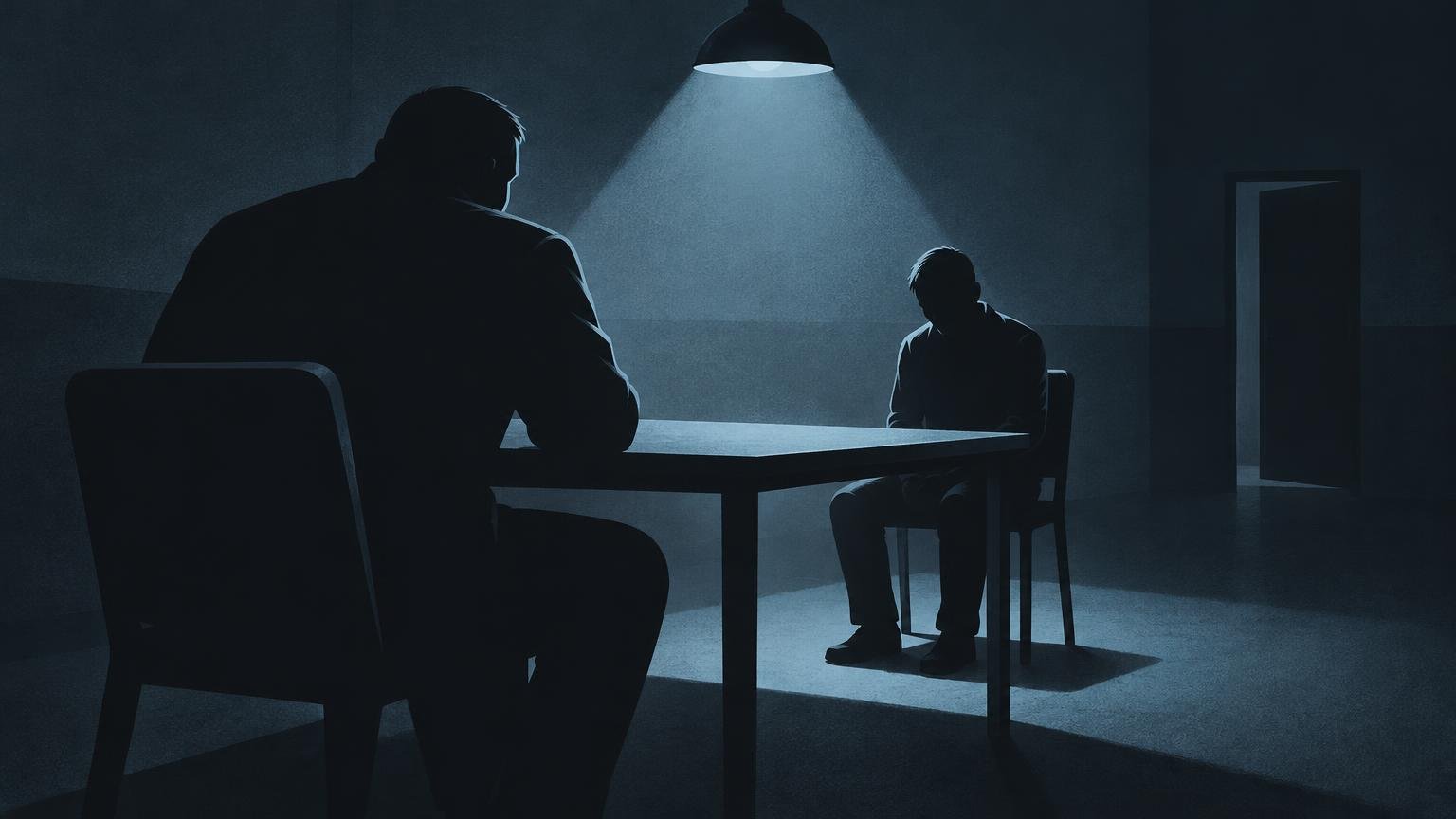
Dark blue-toned illustration of two silhouetted people seated across a table in an interrogation-like room, with a large foreground figure facing a smaller bowed figure under an overhead cone of light and an open doorway at right.

An innocent person may confess when pressure, exhaustion, fear, vulnerability, and the immediate desire to escape questioning overwhelm concern about future consequences. The confession still must be traced from the first question to its independent corroboration.

Categories Investigations & Evidence

Tim Tebow Helped Sell Life Surge. A ‘Pause’ Is Not Accountability.

October 6, 2026 by True Crime
Dark blue editorial illustration of a silhouetted speaker at a podium addressing an audience, with a spotlight leading toward a desk holding a tall stack of papers, a small blank ticket-shaped card, and a locked case.

Tim Tebow’s repeated paid appearances gave Life Surge more than star power. They transferred trust—and that creates obligations a reported pause cannot settle.

Categories Fraud & Organized Crime
True Crime Factor

Follow the case, understand the evidence, and examine the decisions that shaped the outcome.

New on the Blog

  • Why Would an Innocent Person Confess to a Crime?
  • Tim Tebow Helped Sell Life Surge. A ‘Pause’ Is Not Accountability.

Stay in the Loop

Join the True Crime Factor list for case histories, investigative turning points, and clear explanations of evidence.

Privacy Policy

© 2026 True Crime Factor

Information

  • About
  • Editorial Policy
  • Privacy Policy
  • Contact
  • Articles